
Written by Kate Tietje
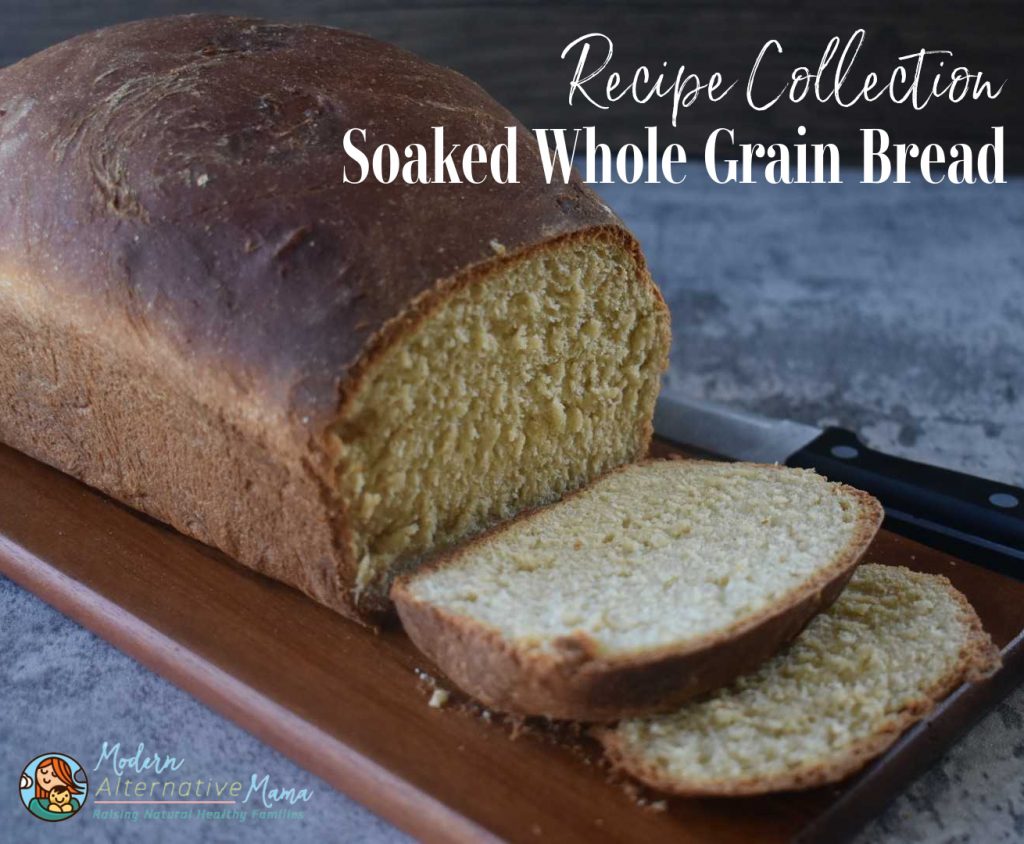
This whole-grain bread is delicious! Include the seeds for extra texture and flavor, or don’t — depends on your family’s presence. Either way, you will love it.
If you’re curious about the soaking part, you might want to read about why we soak grains and how to prepare grains. If you’re wondering why I post bread recipes at all when so many people are talking about how evil wheat is, you might want to read, are grains good or bad?
This recipe is soft and delicious, with a crispy crust outside. It contains caraway seeds, which I love. You can leave the seeds out if you prefer, and then you’ll just have a delicious, whole wheat bread.

Soaked Whole Grain Bread
Ingredients:
- 3 cups freshly ground whole wheat flour
- 3 tbsp. raw honey
- 2 tbsp. caraway seeds (optional)
- 1/4 cup sunflower seeds (optional)
- 1/4 cup coconut oil or butter
- 1 egg
- 1 1/4 cups raw milk or cultured milk (buttermilk or equal parts yogurt and water)
- 2 tsp. sea salt
- 3 tsp. yeast
Directions:
Step 1: Combine the whole wheat flour, honey, and seeds in a large bowl.
Step 2: Add the coconut oil, egg, and raw milk and stir it all up.
Step 3: Cover with a towel and set it in a warm location overnight or for about 12 hours (a bit longer is fine, too, but it will taste increasingly sour).
Step 4: In the morning, sprinkle salt and yeast over the dough.
Step 5: Knead this in for several minutes until you can’t see any more flecks of yeast and the dough is smooth and elastic. Let it rise for about 2 hours in a warm place, then punch it down and shape it into loaves.
Step 6: Allow the bread to rise in the pans for another 1 – 2 hours until it has crested the pans. Preheat the oven to 350ºF, and bake the bread for about 45 minutes, until golden brown and hollow sounding when tapped.
That’s it! Super simple and super yummy bread!
Soaked Whole Grain Bread
Ingredients
- 3 cups freshly ground whole wheat flour
- 3 tbsp. raw honey
- 2 tbsp. caraway seeds optional
- 1/4 cup sunflower seeds optional
- 1/4 cup coconut oil or butter
- 1 egg
- 1 1/4 cups raw milk or cultured milk buttermilk or equal parts yogurt and water
- 2 tsp. sea salt
- 3 tsp. yeast
Instructions
- Combine the whole wheat flour, honey, and seeds in a large bowl.
- Add the coconut oil, egg, and raw milk and stir it all up.
- Cover with a towel and set it in a warm location overnight or for about 12 hours (a bit longer is fine, too, but it will taste increasingly sour).
- In the morning, sprinkle salt and yeast over the dough.
- Knead this in for several minutes until you can't see any more flecks of yeast and the dough is smooth and elastic. Let it rise for about 2 hours in a warm place, then punch it down and shape it into loaves.
- Allow the bread to rise in the pans for another 1 - 2 hours until it has crested the pans. Preheat the oven to 350ºF, and bake the bread for about 45 minutes, until golden brown and hollow sounding when tapped.





I’m confused; in the links you talked about not soaking in a dairy medium because of the calcium. But you soak in milk here. Is there new research to this? Could you clarify. Thanks! This looks delicious.
Can you soak in kefir?
Sure, that should work too. If it’s really thick, you might want to use part kefir and part water.
Does the regular recipe make 1 or 2 loaves?
What kind of changes would you make to use sourdough starter instead of yeast?